Home Market & Sectors Mining & Minerals
Mining and Minerals
Ongwe Minerals Discovers a 20-Metre Zone of Gold Mineralisation at Nguni
The maiden drilling programme at the Omatjete Gold Project has returned significant gold intersections, with the Nguni surface anomaly now extending more than nine kilometres.
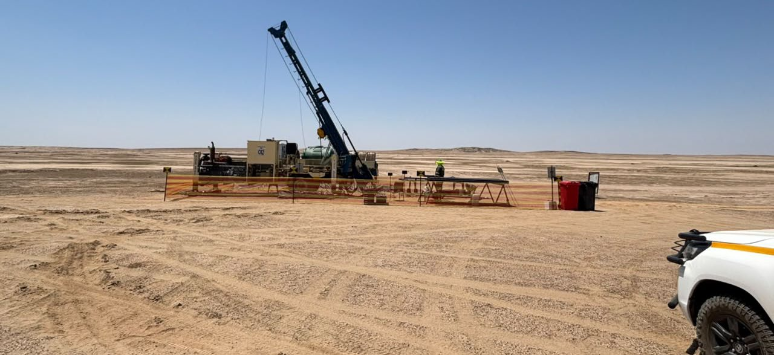
Ongwe Minerals Inc. has intersected significant gold mineralisation in its first drilling programme at the Nguni Gold Discovery in Namibia, with a standout intersection of 20 metres at 1.31 grams per tonne (g/t) gold.
In a press release issued Tuesday, the Canadian-listed exploration company said drilling had confirmed extensive gold mineralisation across multiple holes at Nguni, part of its Omatjete Gold Project.
The results include a 20-metre intersection grading 1.31 g/t gold from a depth of 28 metres in drill hole NRC026, including 16 metres at 1.57 g/t gold.
Another significant intersection returned 12 metres at 1.58 g/t gold from a depth of 54 metres in drill hole NDD010, while hole NRC008 intersected 23 metres at 0.76 g/t gold from 56 metres, including eight metres at 1.65 g/t gold.
Ongwe has completed 5,135 metres of drilling across 44 holes, comprising 3,974 metres of Reverse Circulation (RC) drilling in 37 holes and 1,161 metres of diamond drilling in seven holes, the announcement covers assay results from 28 RC holes and all seven diamond holes, with results from the remaining nine RC holes still outstanding.
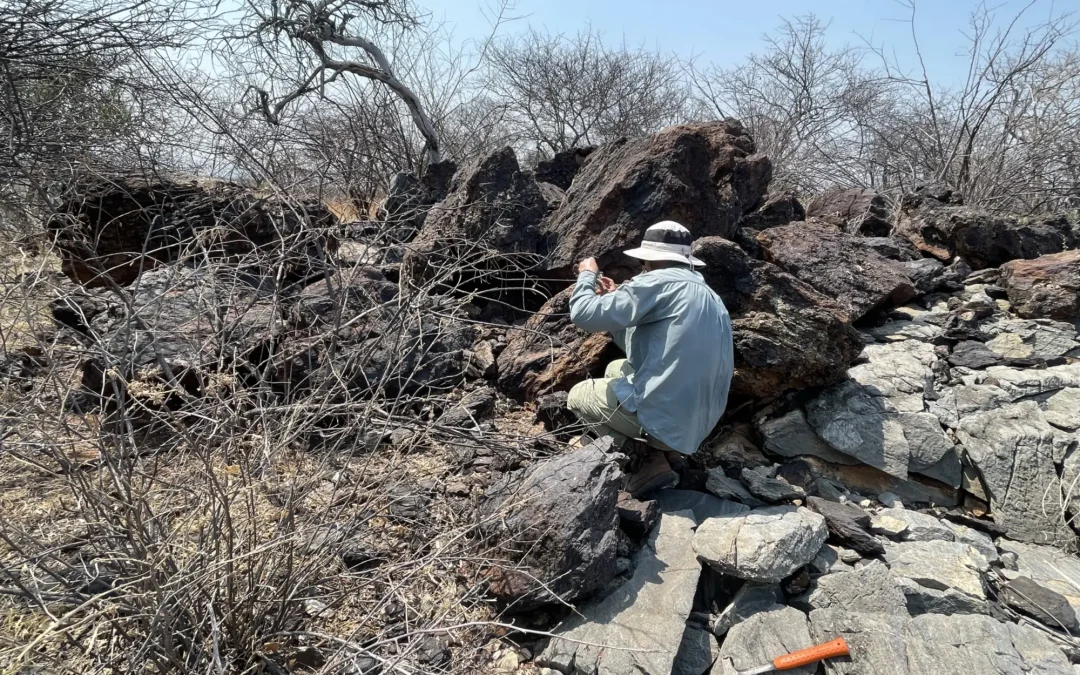
The drilling has also helped the company understand the geological controls of gold mineralisation at Nguni, where early results show that gold grades are associated with contacts between quartz-biotite schist and cordierite schist, according to the statement.
Commenting to the program in the statement, Ongwe Minerals' Chief Executive Officer, Dave Underwood said the company had progressed from discovering the initial gold-in-soil anomaly to completing its first drilling programme within six months.
“We have fast-tracked Nguni from discovery of the initial gold-in-soil anomaly through the first drill program in just 6 months,” he said.
Underwood said the exploration team had encountered challenges since the gold system is covered by sheetwash, colluvium, desert sand and calcrete, making it difficult to use surface soil results alone to determine drilling locations.
He said the company had therefore combined drone magnetic surveys with diamond drilling to obtain geological and structural information, alongside multi-element geochemistry, to improve its understanding of the area.
The company's surface exploration has also extended the Nguni gold-in-soil anomaly approximately 2.8 kilometres northwest, where sampling identified a new 1.5-kilometre-long anomaly with gold values of up to 0.55 g/t.
The main Nguni anomaly now has an inferred strike length of more than nine kilometres and remains open in all directions, according to the report.
Ongwe has also identified three additional gold-in-soil anomalies approximately five kilometres southeast of Nguni using the company's detectORE analytical system, however their gold grade potential is yet to be confirmed through follow-up sampling.
Nguni forms part of the Okondeka Fault Zone, a regional geological structure that also hosts WIA Gold's Kokoseb Gold Deposit and Ongwe's Manga Gold Discovery, the company said the structure extends for at least 80 kilometres, with Nguni located approximately 55 kilometres east of Kokoseb and 14 kilometres east of Manga.
Ongwe Minerals is planning to undertake further soil sampling, geological mapping and drone magnetic surveys across the Manga-Nguni corridor before designing a larger, more targeted drilling programme expected to begin in early 2027.
The company said land access negotiations for parts of the Nguni area had progressed, with final legal agreements being drafted,however completion of the access agreement remains uncertain, although Ongwe expects it to be finalised by early 2027.