Home Market & Sectors Tourism & Hospitality
DEVELOPMENT
N$18m Eco-Village Boosts Rural Development in Epukiro
N/a’an ku sê Foundation’s 40-home solar village blends housing, green energy, and enterprise to drive long-term community growth in Omaheke.
By: Johanna N Festus
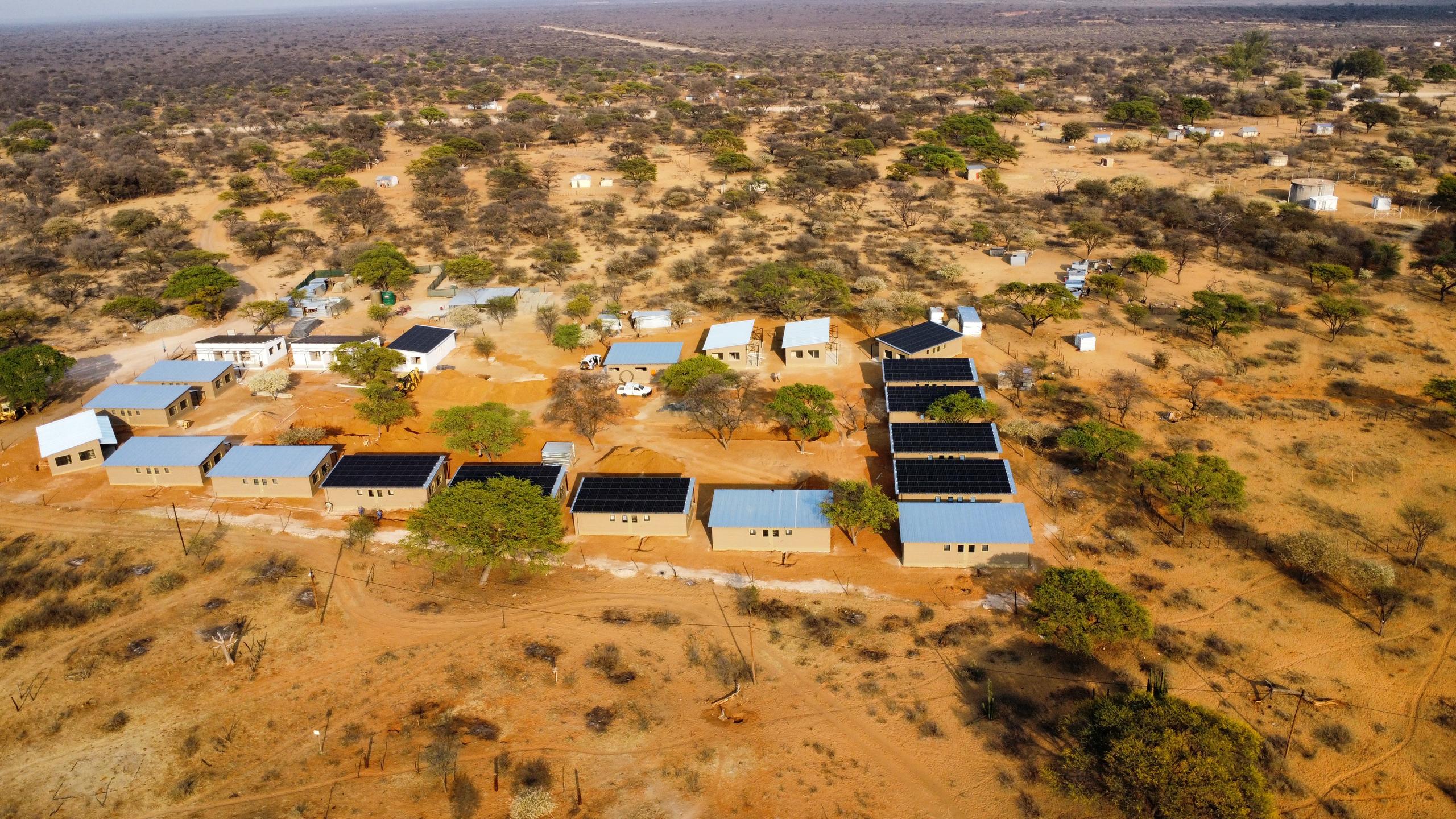
The N/a’an ku sê Foundation on Friday inaugurated a housing project in Epukiro, aimed at improving living conditions for 40 Ju/’hoansi San families through sustainable housing, renewable energy and improved access to essential services.
The Ju/’Hoansi Eco-Village combines two-bedroom social housing units with off-grid solar power, water recycling systems and community infrastructure designed to improve health outcomes and promote long-term rural development.
The inauguration follows the project’s groundbreaking ceremony on 18 January 2026.
According to N/a`an ku sê, the development was made possible through funding of €1,002,436, equivalent to more than N$18 million, provided through the Verburg Fonds, with additional contributions from partners including Solar Saver, SIAAC, the ISUZU Foundation, Quartz Construction and Nictus Furniture.
Beyond providing housing, the eco-village seeks to address the underlying causes of recurring health problems by incorporating clean cooking facilities, water recycling infrastructure, a community garden to strengthen food security and an enterprise centre intended to stimulate local economic activity.
“In 2003 we came to Epukiro with a clinic (Lifeline Clinic). Year after year, we treated the same children for the same illnesses,” said Marlice van Vuuren, Executive Director of the N/a’an ku sê Foundation.
“And we learned a hard truth, you cannot keep a child healthy when the home they sleep in makes them sick. So we stopped treating only the symptoms, and started changing the systems.”
Beneficiary selection was conducted in partnership with the Epukiro San Development Committee through a transparent, points-based evaluation system designed to prioritise families most in need.
The foundation hopes the project will serve as a model for community-led housing solutions that integrate adequate shelter, basic services and sustainable livelihoods across Namibia and Southern Africa.