Home Market & Sectors Agriculture & Oceans
WATER AND INFRASTRUCTURE
Ngurare Urges Investment in Water to Boost Namibia’s Economy
Prime Minister Elijah Ngurare says reliable water infrastructure is critical to supporting agricultural production, industrial development and emerging industries, warning that persistent water shortages could undermine Namibia’s economic transformation ambitions.
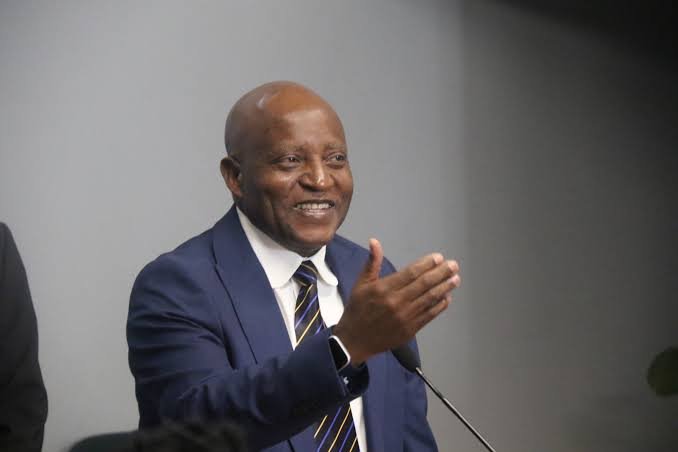
Prime Minister Elijah Ngurare has called for increased investment in reliable and climate-resilient water infrastructure, saying Namibia’s economic transformation ambitions depend on securing sustainable water supplies for agriculture, industries and rural communities.
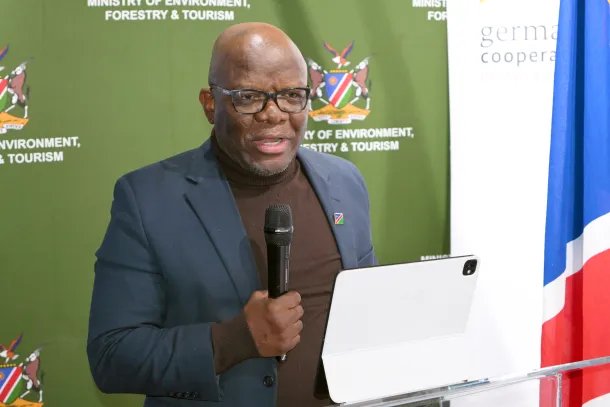
Speaking at the third Namibia Regional Water Symposium in Swakopmund this week, Ngurare said water infrastructure must be treated as an economic priority because of its role in supporting food production, public health, industrial development and emerging industries, including green hydrogen.
“Our ambitions for economic transformation must therefore be supported by water infrastructure that is reliable, affordable and resilient to a changing climate,” he said.
Ngurare said Namibia has made progress in expanding access to water since independence, but warned that remaining gaps continue to affect communities and economic activity.
Citing figures presented by the minister, he said household access to water had reached 91.4%, with rural access standing at 83.5% and urban access at 98%.
However, he raised concern over sanitation, saying close to 40% of Namibians still practise open defecation.
He argued that the remaining gaps in water and sanitation services should receive greater attention, particularly in rural areas where inadequate infrastructure affects people's livelihoods and economic opportunities.
“We may not afford perhaps to make a spaceship for us to go to the moon or to the sun, but certainly we have the resources to make sure every Namibian, three million of us, everyone would have access to water, clean, safe drinking water,” Ngurare said.
He also highlighted the need for practical solutions to address water shortages, revealing that he had directed authorities to intervene in parts of the Omusati Region, particularly Otamanzi, Okahao and Tsandi, where communities have been forced to dig in dangerous places to access water.
Ngurare said NamWater had been directed to station water tankers in the affected constituencies while the Ministry of Agriculture, Fisheries, Water and Land Reform would provide funding for pumping water through the Etaka Canal.
He stressed that administrative and payment-related delays should not prevent water from reaching communities.
Beyond immediate water supply challenges, Ngurare highlighted the potential of locally developed technology to reduce the cost of accessing safe drinking water.
He cited mini-desalination plants developed through collaboration with the Environmental Investment Fund (EIF) and young Namibian engineers as an example of innovation that could help address water scarcity.
According to Ngurare, the initiative began with pilot installations around Spitzkoppe in the Erongo Region, where reverse osmosis technology was used to convert salty water into clean drinking water.
He said the technology was subsequently installed in several other communities, demonstrating how locally developed solutions could improve access to water without relying exclusively on large-scale infrastructure projects.
The Prime Minister also called for stronger collaboration between Namibia and South Africa, particularly in sharing expertise and mobilising resources to address water challenges.
He said investment in water infrastructure should extend beyond providing household access, arguing that dependable supplies are necessary to support productive economic activity and strengthen rural communities.
“Let us walk the talk on service delivery. Let us walk the talk unapologetically on service delivery,” he said.
Ngurare said the country must ensure that investment discussions translate into tangible improvements in water access, particularly for communities that remain underserved.