GREEN INDUSTRIALISATION
CIF Programme Opens New Financing Pathways for Namibia's Heavy Industries Internationally
Namibia is among seven countries included in a US$1.75 billion climate financing programme designed to support the development of low-carbon heavy industries through concessional finance and private-sector investment.

The Climate Investment Funds (CIF) has included Namibia in its US$1.75 billion, approximately N$29.66 billion, Industry Decarbonization Programme, which seeks to mobilise investment in cleaner industrial production through concessional financing and partnerships with multilateral development banks.
The programme provides financing to help countries develop low-carbon pathways for heavy industries, including sectors that traditionally rely on carbon-intensive production processes.
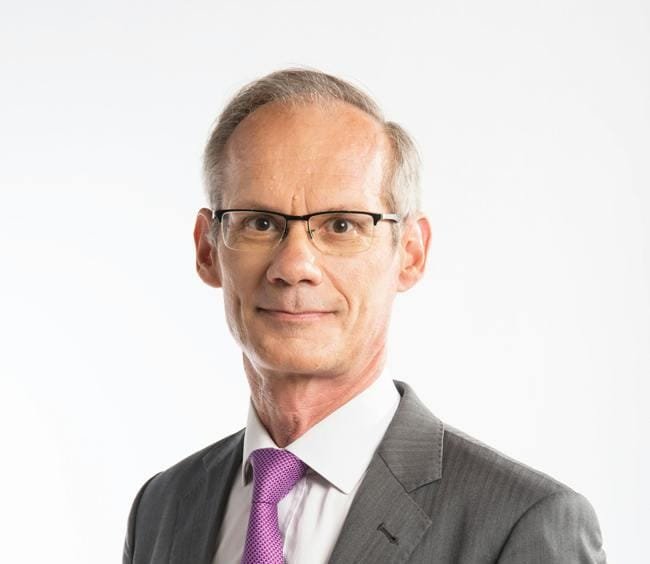
Speaking at the ongoing 31st United Nations Climate Change Conference (COP31), taking place from 9 to 20 November 2026 in Antalya, Türkiye, Daniel Morris, Head of Clean Energy at CIF, said Namibia had an opportunity to establish cleaner industries as it expands its industrial base.
He said the country's industrialisation pathway differs from that of more advanced emerging markets such as Brazil and Mexico, where investment is increasingly directed towards changing existing industrial facilities and production processes to reduce emissions.
"For a country like Namibia, I think we expect that as the country industrialises, it will avoid establishing more polluting types of industry and will immediately move into cleaner industries," Morris said.
He said this would require investment in construction, industrial facilities, processing and the development of value chains that enable Namibia to produce commodities for domestic and international markets.
"What that means is there will be a lot of work to do in terms of building and developing facilities, building up the types of industries that you want to pursue in Namibia," he said.
"We launched in 2024 with a pledge of one billion dollars. We have since invited seven countries to participate in the programme and have allocated an additional 750 million," he said.
Morris said the additional financing expanded the programme's capacity to support industrial projects across the participating countries.
He added that the US$1.75 billion would be combined with financing from multilateral development banks, the private sector and national governments to identify suitable investment opportunities.
Explaining CIF's financing model, Morris said the fund works with multilateral development banks to provide concessional financing to countries facing climate-related development challenges.
"Concessional finance means that it's low-cost, long-term finance that can do the work that other types of finance, even finance through the multilateral development banks, can't do," he said.
He said CIF focuses on areas where technology, financing and policy conditions have made it difficult for new projects to progress.
"We are designed to be on the frontier of climate challenges, really looking for where technology, finance, and policy are struggling to get traction and make forward progress, positive progress," Morris said.
A key requirement of the Industry Decarbonization Programme is that at least 50% of each country's investment plan must be dedicated to private-sector activities, recognising the role of businesses in developing and operating heavy industrial projects.
"Our programme requires that a country's investment plan have 50 percent of the entire envelope dedicated to private sector activities, really recognising that changes in heavy industry will have to be driven by the private sector," he said.
Morris said the financing could be structured differently depending on the needs of individual projects, with concessional loans and guarantees among the available mechanisms.
"Sometimes our finance will come in the form of a concessional loan that helps buy down an interest rate for a business that makes something that was challenging for them less challenging," he said.
He explained that guarantees could also help attract private investment by reducing risks associated with particular projects.
"Sometimes they'll want a guarantee because a lot of the finance will already be lined up, but there will be a particular part that's quite challenging, and something like a guarantee gives the confidence that the work can be done and the private sector can come in without taking on too much risk," Morris said.
He added that the development of industrial projects also required cooperation between governments, businesses, development banks and communities affected by the investments.
"At the end of the day, we provide this flexible finance so that the conditions on the ground can be met," he said.
Morris said CIF also involves civil society organisations and workers in the process to ensure their views are considered when projects are developed.
For Namibia, the programme presents an opportunity to support the development of emerging industries such as green hydrogen, green iron and steel, alongside the infrastructure and processing facilities needed to establish domestic industrial value chains.
The country's participation also comes amid efforts to attract international financing and private investment into its green industrialisation ambitions under the Sixth National Development Plan.
However, the programme's total US$1.75 billion financing envelope covers all seven participating countries, with Namibia's individual financing allocation dependent on the development and approval of its investment plan.